By Mojisola Adubi
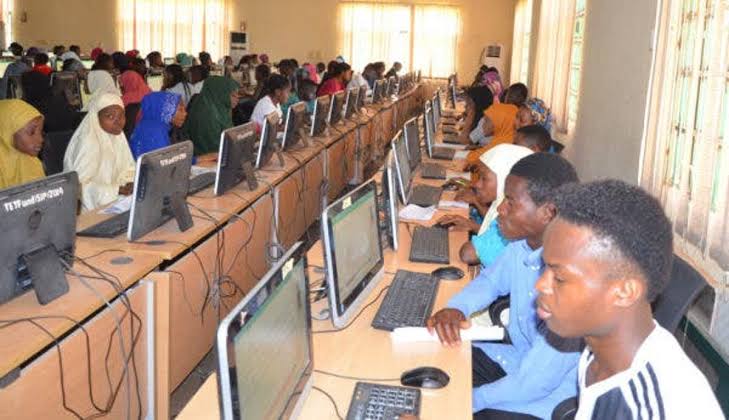
“It’s was strange, coupled with poor network connectivity and power outage challenges” these are voices of Esther Adeyemi, Grace Taiwo, Jomiloju Ilori who sat for the WAEC GCE CBT examination during the November/December session last year, as they recounted their experiences with mixed feelings.
The reality of CBT exams is far from seamless as their experiences reinforces fears that technical glitches could undermine students’ performance, regardless of their academic preparedness.
In July 22nd 2025, when the Federal Government announced plans to migrate the West African Examinations Council (WAEC) examinations fully to Computer-Based Testing (CBT) by May/June 2026, it sounded like a bold leap into the future of education. However, across classrooms, staff rooms and legislative chambers, one critical question quickly followed: Is Nigeria truly ready for this change?
It could be recalled that the Minister of Education, Dr. Tunji Alausa, disclosed that objective components of WAEC examinations would commence under the CBT format as early as November 2025, with full implementation expected in 2026.
According to the government, the move is designed to modernise public examinations, curb the perennial menace of examination malpractice and enhance efficiency.
Yet, the policy has ignited heated debate among education stakeholders.
For many critics, the announcement appears premature, arguing that they Nigeria’s education system is still grappling with basic challenges such as poor infrastructure, epileptic power supply, unreliable internet connectivity and limited access to computers, especially in public schools and rural communities.
These concerns echoed loudly at the National Assembly, where the House of Representatives urged the Federal Government to suspend the planned rollout of CBT for the 2026 West African Senior School Certificate Examination (WASSCE). Lawmakers warned that rushing the transition could result in mass failure, psychological stress for students and deepened inequality between private and public school candidates.
Despite the apprehension, some educationists believe the shift could be a game-changer—if properly implemented.
A public secondary school teacher at Timi Agbale Secondary School, Ede, Mr. Akinyinka Sunday,
described the initiative as a step in the right direction.
According to him, “It is a welcome development because the main aim is to curb examination malpractice, which has become a major issue in our system,” he said.
“CBT will also force students to be more focused and serious in their preparation.”
Also, a teacher in a private secondary school, Mrs. Bimbo Olaoye, expressed optimism that students would adapt quickly, saying “Computer Science is already part of the secondary school curriculum. With proper exposure and facilities, students won’t find it strange.”
However, one of the student who are languishing over the conduct of WAEC CBT, Esther Adeyemi said “most of us had network problem which affected us a lot because it took them long before they were able to solve the problem” speaking further she complained by saying “It was not like the written paper which to me I was not fully ready for the challenges faced.”
Also, Jomiloju Ilori lamented that “who sat for the WAEC GCE CBT examination during the November/December session last year, recalled her experience.
“Poor network connectivity was my biggest challenge,” she said. “Time management was also difficult because once the system delays, it affects everything.”
Corroborating the duo, NECO GCE candidate Grace Taiwo also recount her experience with mixed feelings.
“Despite proper searching before entering the center people were still involved in exam malpractice, she said. “Written form is better than CBT one because for now it’s strange”.
Amid the controversy, WAEC and the National Examinations Council (NECO) insist that the transition is achievable.
Speaking during a Zoom meeting organised by the Education Writers Association of Nigeria (EWAN), titled “CBT for SSCE: Is Nigeria Ready?”, the Head of WAEC’s National Office, Dr. Amos Dangut, alongside NECO Registrar, Prof. Dantani Wushishi, revealed that both examination bodies already conduct parts of their examinations using CBT.
They acknowledged, however, that nationwide availability of adequate facilities remains a major hurdle and would require significant government support to overcome.
As Nigeria inches closer to digital examinations, the debate over WAEC’s CBT transition underscores a larger issue: the gap between policy ambition and on-ground realities. While the promise of malpractice-free, efficient examinations is alluring, success will depend largely on investment, planning and inclusiveness.
For millions of Nigerian students, the real examination may not just be answering questions on a screen but surviving a system still learning how to go digital.
About the Author